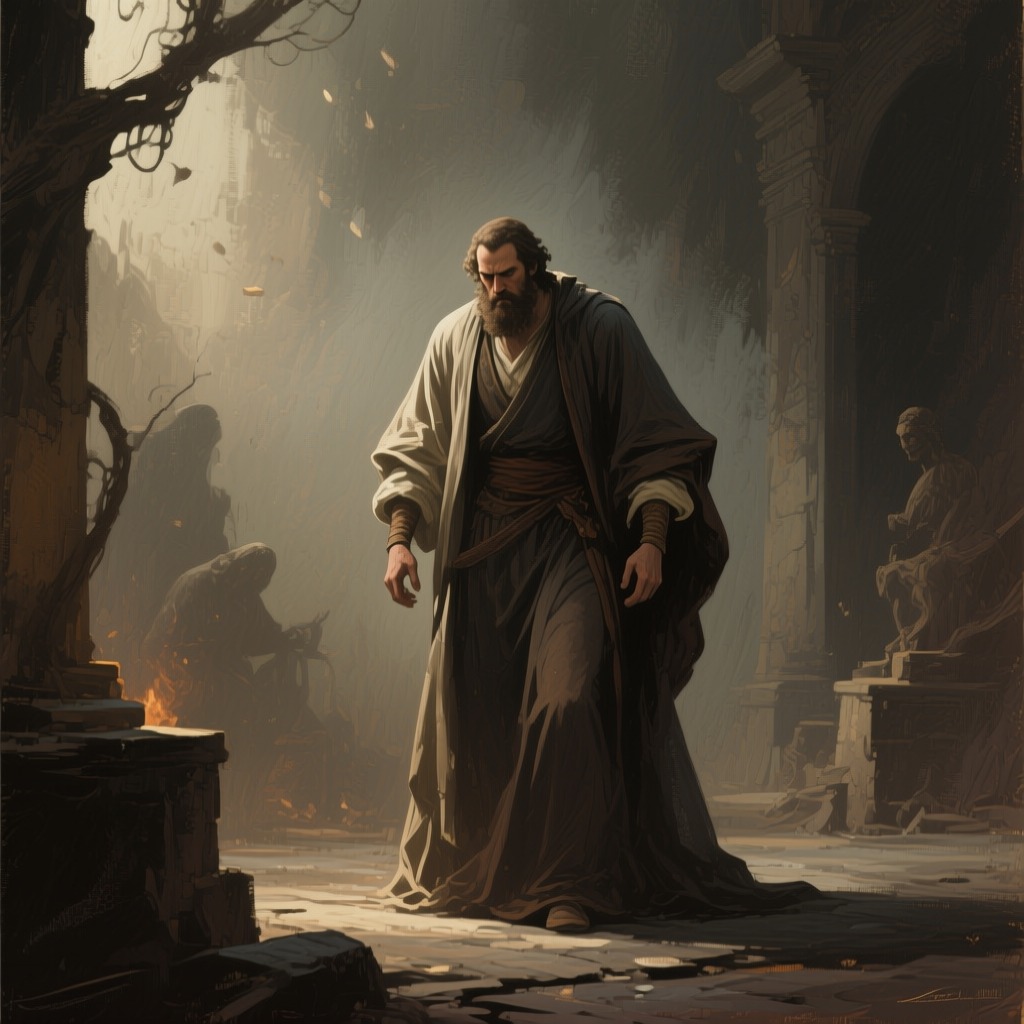
Lysa Arryn
Lysa Arryn, the Lady of the Eyrie and widow of the murdered Hand of the King, Jon Arryn, is a figure shaped by profound grief, fear, and a fierce, isolating maternal love. Her actions, driven by a volatile blend of paranoia and a desperate need for security, fracture the great alliances of the Seven Kingdoms at the very moment they are most needed, transforming her from a potential source of strength into a symbol of retreat and the tragic cost of unhealed trauma.
Identity and Background
Lysa was born a Tully of Riverrun, the younger daughter of Lord Hoster Tully and sister to Catelyn Stark and Edmure Tully. Her marriage to Jon Arryn, a man decades her senior, was a political arrangement, not a love match. The years of her marriage were marked by repeated tragedy: she suffered two stillbirths and numerous miscarriages, leaving her with only one living child, a sickly boy named Robert. This history of loss forged an obsessive, protective bond with her son, whom she saw as her sole purpose and possession. After Jon Arryn's sudden death, which she firmly believed was murder by the Lannisters, she fled King's Landing in secret, taking her household and her son back to the impregnable Eyrie, the mountain fortress of House Arryn.
Life and Plot Trajectory
Lysa's trajectory is defined by a series of defensive, often self-defeating, withdrawals. Her first major act is to send a secret, coded letter to her sister Catelyn, warning that the Lannisters had murdered her husband. This letter sets the entire Stark-Lannister conflict in motion. Yet when Catelyn, acting on this warning, captures Tyrion Lannister and brings him to the Eyrie for judgment, Lysa's response is not solidarity but fury. She berates Catelyn for dragging her into the quarrel, revealing that her warning was meant to keep the Starks away from the Lannisters, not to provoke a confrontation. Her fear of reprisal outweighs her desire for justice. She imprisons Tyrion in the sky cells, a cruel dungeon open to the elements, and subjects him to a mockery of a trial, intending to have him executed through the Moon Door, a trap door in the High Hall that opens onto a thousand-foot drop. When Tyrion demands a trial by combat and his champion, Bronn, wins, Lysa is forced to release him, a humiliation that deepens her resentment. Her final, decisive act of isolation is her refusal to aid her family in the war that follows. When her brother Edmure and nephew Robb Stark call their banners to fight the Lannisters, Lysa keeps the knights of the Vale locked behind the Bloody Gate, declaring the Eyrie impregnable and refusing to risk her son's inheritance for a war she did not start.
Relationships and Conflict
Lysa's relationships are defined by a profound inability to trust or to see others as separate from her own needs. Her bond with her sister Catelyn is the most significant and tragic. While Catelyn comes to her for help, believing in the sisterly bond of their youth, Lysa sees her only as a threat to her fragile peace. She coldly rebukes Catelyn for bringing the Imp to her door, and when Catelyn suggests fostering young Robert at Winterfell to give him companionship, Lysa reacts with terrifying rage, threatening to throw her out the Moon Door. Her relationship with her son, Robert Arryn, is the core of her identity, but it is a deeply unhealthy one. She keeps him perpetually infantilized, breastfeeding him when he is six years old, and shielding him from any challenge or hardship, ensuring his weakness and dependence. Her suitors, a flock of lords from the Vale, are not partners but pawns in a game she plays for amusement, rejecting them one by one to maintain her own solitary rule. Her treatment of Tyrion Lannister is a study in displaced vengeance; she is certain of his guilt not because of evidence but because she needs a target for her grief and fear, a target that is present and vulnerable.
Change and Ending
Lysa Arryn undergoes no redemptive change. She remains trapped in a cycle of fear, suspicion, and self-preservation. The trauma of her stillbirths and her husband's murder does not lead to wisdom or strength but to a rigid, paranoid worldview where everyone is a potential enemy. Her final state is one of complete isolation, ruling from a fortress she believes is safe but which has become a gilded cage for herself and her son. She has alienated her family, refused her duty to her bannermen, and chosen a path of impotent safety over the risks of honor and kinship. Her story ends not with a dramatic fall but with a quiet, stubborn refusal to engage with the world, leaving her a prisoner of her own fears, a ghost in her own castle.
Thematic Significance
Lysa Arryn serves as a powerful counterpoint to the themes of duty, honor, and family that drive the other characters. She embodies the destructive potential of unchecked grief and the paralysis of fear. Her choice to prioritize her son's perceived safety over the greater good of her house and the realm illustrates the tragic consequences of a love that has curdled into possessiveness. She is a warning of what can happen when the bonds of family, duty, and honor are severed by trauma, leaving only a hollow shell of a person ruled by the desperate need for control. Her refusal to act is as consequential as any act of war, demonstrating that in the game of thrones, inaction is itself a devastating choice.